Scour usually happens out of sight, under water and during high flows, so by the time it shows above water it may have been going on for some time. The signs below are what asset owners, inspectors and site engineers can see or survey at each type of structure.
If a structure shows movement, cracking, tilting or settlement, call the engineer responsible for it first. Protection comes after an assessment, not instead of one.
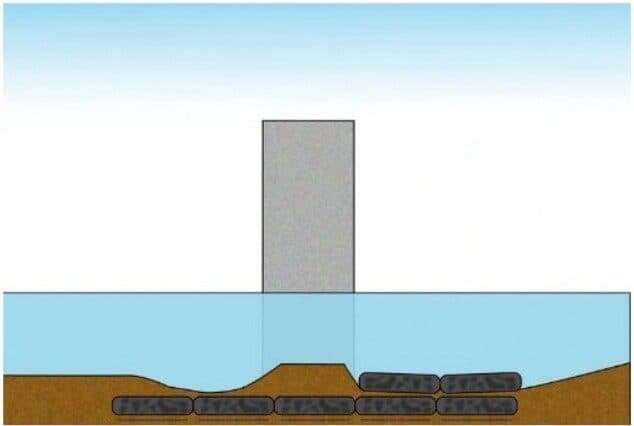
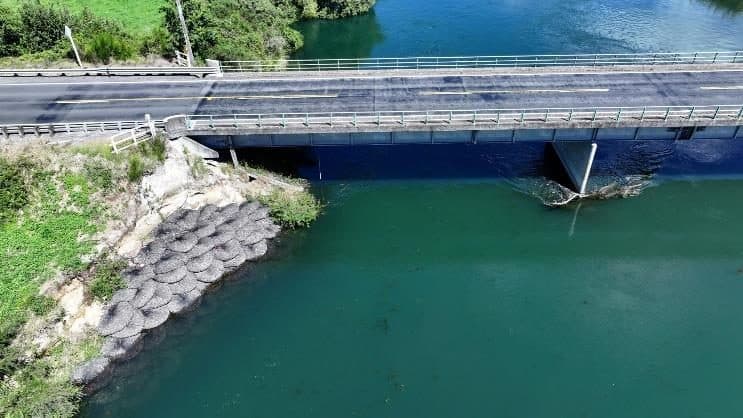
At bridge piers and abutments
The US Federal Highway Administration describes scour, "the erosion around a bridge's foundation caused by flooding", as "the single greatest cause of bridge failures" in the United States (FHWA, 2015).
More on protection: bridge pier and abutment scour protection.
- A hole in the bed at the upstream face or around the base of a pier, found by sounding or survey
- Footings or piles exposed that were once buried
- Settlement, tilting or cracking of a pier or abutment, or a dip in the deck or parapet line
- Debris caught against piers, which widens the obstruction and deepens the scour
- Material lost from around abutments and wing walls
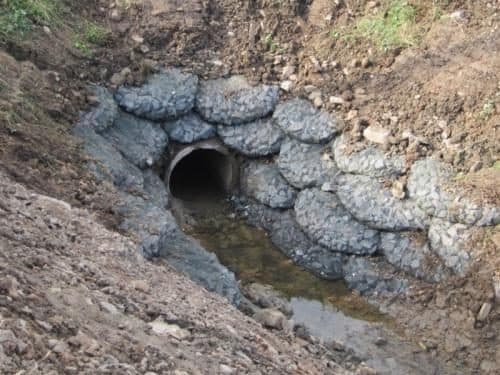
At outfalls and culverts
More on protection: outfall, culvert and drainage channel protection.
- A scour hole where the jet leaves the pipe or culvert
- A headwall or apron slab that is cracked, tilted or undermined
- A gap or void under the end of the pipe
- Banks eroding on either side of the outlet
- Ground settling behind the headwall
At quay walls and berths
More on protection: port, quay wall and berth scour protection.
- The bed deepening at the toe of the wall on successive soundings, most often at berths used by vessels with strong propellers or thrusters
- Loss of toe material in front of the wall
- Cracks or movement in the wall, or settlement of the deck or paving behind it
- Damage at the toe of ramps and around jetty piles
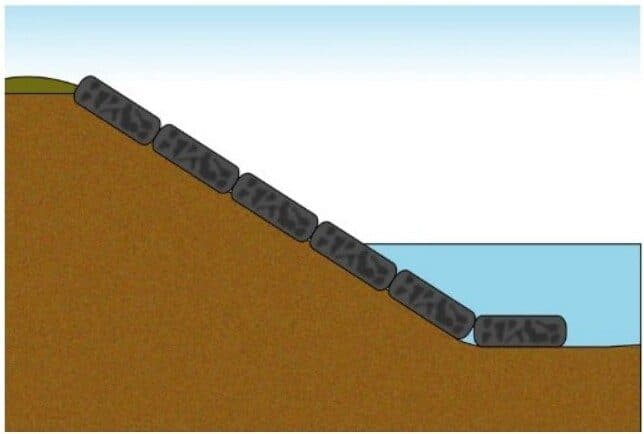
On riverbanks and shorelines
More on protection: riverbank erosion control and coastal and shoreline protection.
- Undercutting at the toe, with the bank overhanging the water
- Fresh slips, or cracks running along the top of the bank
- Trees leaning towards the water or falling in
- Existing protection losing material at its ends and edges
- On coasts, the beach level dropping at the foot of a seawall or revetment
What to survey and record
- Bed levels by sounding or bathymetric survey, compared with earlier surveys: one survey shows the bed level, two show the trend
- Photos from the same points at low water, so changes are easy to see
- A check after every flood or storm, as well as routine inspections
- Dates, water levels and any debris, with each record
When to call the structure's engineer first
We can advise on rock bag protection, but whether a structure is safe, and whether it stays open, is for its engineer and owner to decide.
- Any movement, cracking, tilting or settlement of the structure
- Foundations, piles or pipes exposed or undermined
- Damage to anything that carries traffic, people or a pipeline
Questions
- How is scour found under water?
- By sounding, bathymetric survey, or a diver or ROV inspection, compared with earlier surveys of the same place.
- When should a structure be checked for scour?
- After floods and storms, and at the regular intervals set by the owner's inspection programme.
- Can scour be repaired once it is found?
- Often, once an engineer has assessed the structure. Rock bags are one way to fill scour holes and armour the bed; the designer decides what suits the site.
Sources
Published by EVOSNT Trading FZCO, manufacturer of EVO Rock Bags. Product figures are from our technical specifications. General guidance only; the project engineer is responsible for the final design.