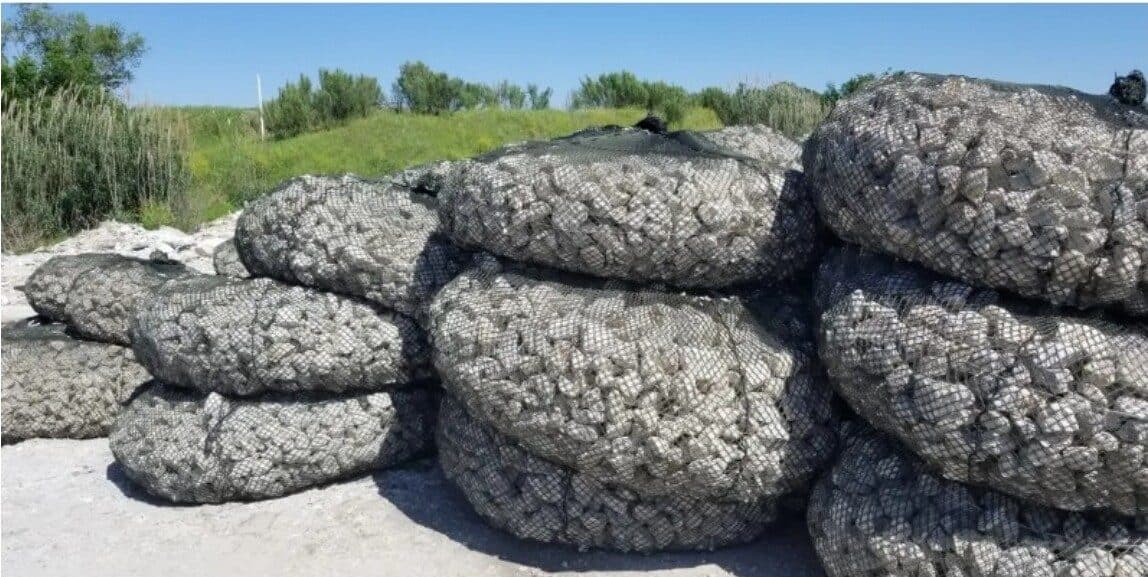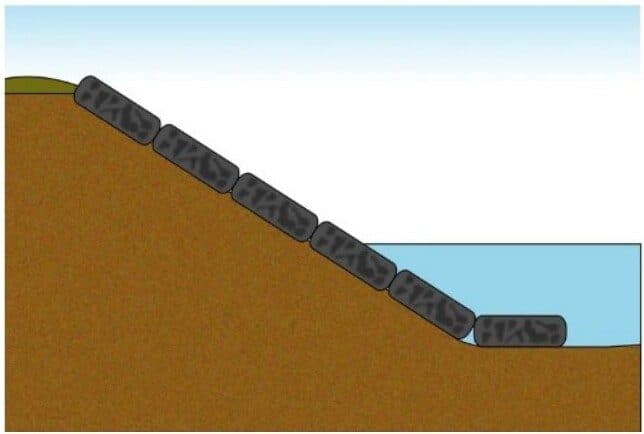
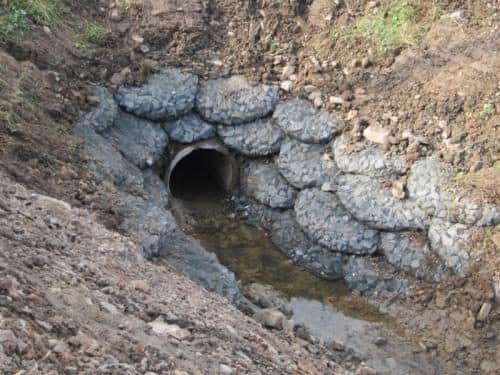
At an outfall, flow that was confined in a pipe or culvert hits an open bed or bank at high speed. Without protection it digs a scour hole at the outlet, then works back under the headwall and the pipe itself.
Rock bags form an apron at the outlet that absorbs the jet and spreads it out. Because they are flexible, they follow the shape of an existing scour hole and are quick to place as a repair.
What goes wrong at an outlet
- A scour hole forms where the jet hits the bed
- The hole grows back toward the structure and undermines the headwall or apron slab
- Banks either side of the outlet erode from eddies
- On coastal outfalls, waves and tides add to the outflow
How rock bags are used
Bags are laid as an apron in front of the outlet, wide enough to cover the spreading jet and long enough for the flow to slow down. Bags at the sides of the apron protect the banks from eddies.
The rock inside each bag reduces flow velocity by absorbing energy in the gaps between stones. Over time those gaps trap silt and gravel, and vegetation can take hold above water level, which ties the apron into the bank.
For a small outfall, the 2 ton bag is often enough; larger culverts and stormwater outfalls with higher exit velocities may need the 4 or 8 ton bag. The outlet velocity decides, see the size guide.
What to send for a quote
- Pipe or culvert size, and design flow or outlet velocity
- Photos of the outlet and any existing scour
- Bed and bank material
- Access for lifting equipment
Questions
- Can rock bags repair an outfall that is already undermined?
- Yes. The bags conform to the scour hole, so they can be placed straight into it to stop further erosion. Structural damage to the headwall still needs its own repair.
- Do rock bags need a geotextile underneath at an outfall?
- That depends on the bed material and the design. Ask us for the Fill and Installation Manual, and confirm the filter requirement with the designer.
- Will vegetation grow through the bags?
- Above water level, silt and fines collect in the gaps between the rocks and plants can establish over time, which is why rock bags are often part of bioengineering designs.
Published by EVOSNT Trading FZCO, manufacturer of EVO Rock Bags. Product figures are from our technical specifications. General guidance only; the project engineer is responsible for the final design.