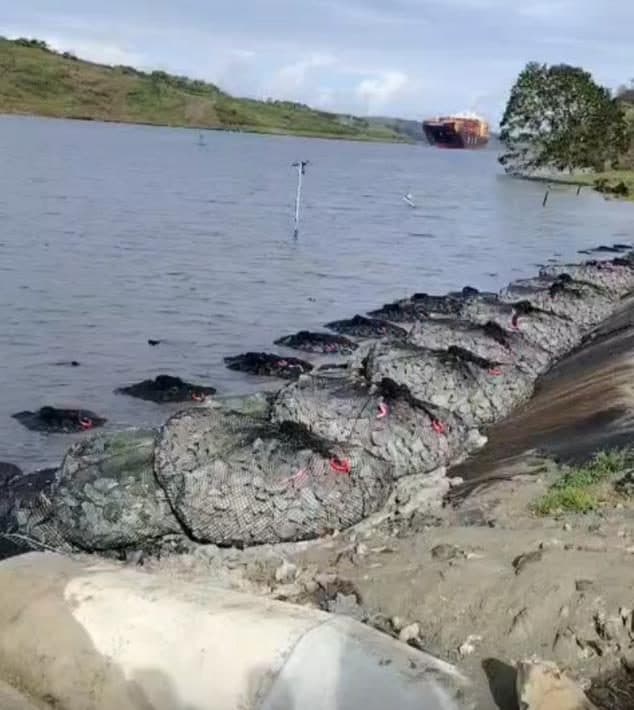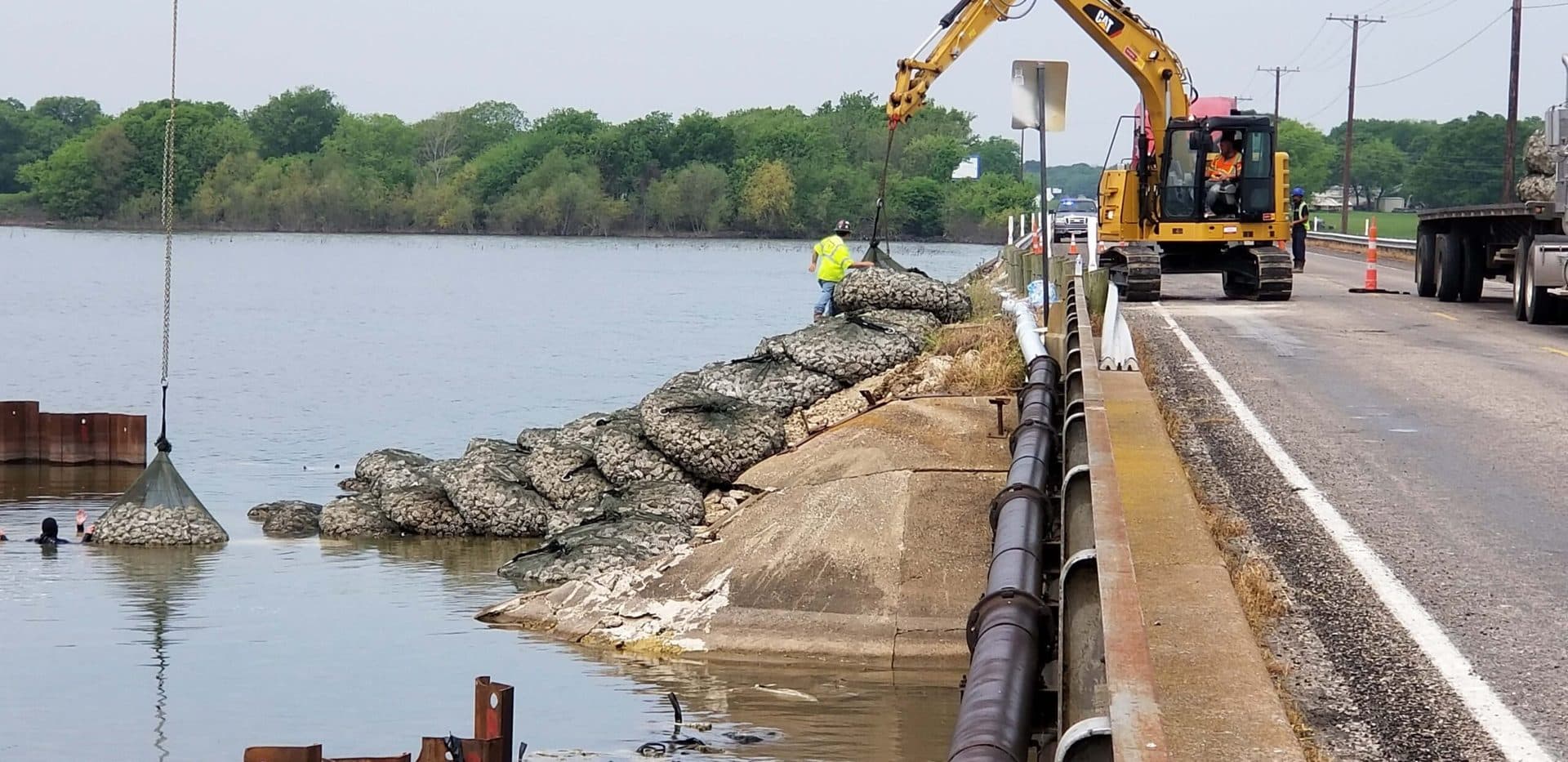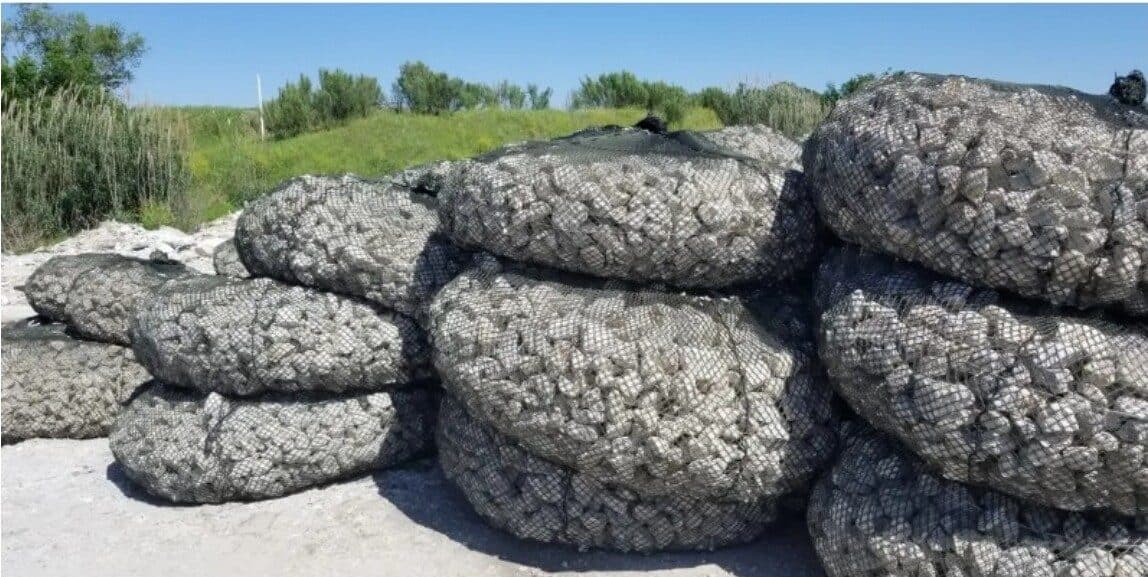
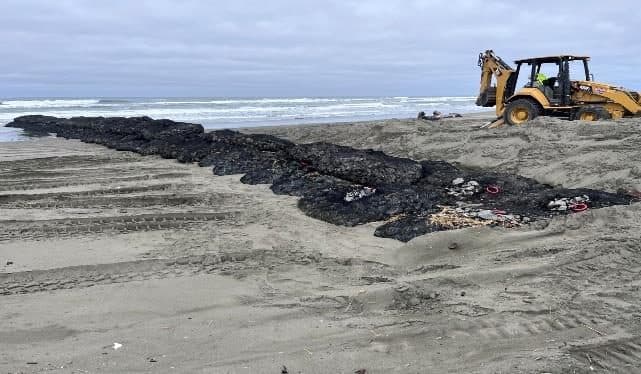
Geotextile sand containers are bags of woven or non-woven fabric filled with sand, often from the site itself. They are widely used for coastal and temporary works. Rock bags are open nets filled with rock.
The difference that matters most: a sand container depends on its fabric. If the fabric tears, the sand washes out. A rock bag's fill stays in place, because it is too large to pass through the mesh even if the bag is damaged.
Side by side
| Rock bags | Geotextile sand containers | |
|---|---|---|
| Fill | Graded rock or crushed concrete | Sand, often dredged or taken on site |
| Container | Open polyester net | Closed geotextile fabric |
| If the container is cut | Rock is too large to escape the mesh | Sand washes out and the unit fails |
| Flow through the unit | Water passes through gaps and loses energy | Water flows around the unit |
| UV, debris and vandalism | Net made for UV and abrasion resistance | Fabric can be damaged by UV, debris and cutting |
| Material on site | Needs rock or crushed concrete | Can use local sand |
When sand containers make sense
- Rock is unavailable or very costly, and sand is on site
- The structure is temporary, or will be buried in sand for most of its life
- Low-energy sites
When rock bags make sense
On Gulf and hot-climate coasts, exposure to UV is a key design point. See coastal and shoreline protection.
- Currents are strong, or the protection sits exposed to sun and debris
- Long design life is needed with little maintenance
- Protection around structures where a failed unit would cause damage
Questions
- What happens if a rock bag net is damaged?
- The rock inside is larger than the mesh opening, so it does not wash out the way sand does from a torn container.
- Are sand containers cheaper than rock bags?
- Often, where sand is on site. Over a long design life, repairs from fabric damage can change that.
- Which is better for strong currents?
- Rock bags, rated up to 5.9 m/s grouped for the 8 ton size, because the rock mass is heavy and the water passes through the gaps.
Published by EVOSNT Trading FZCO, manufacturer of EVO Rock Bags. Product figures are from our technical specifications. General guidance only; the project engineer is responsible for the final design.