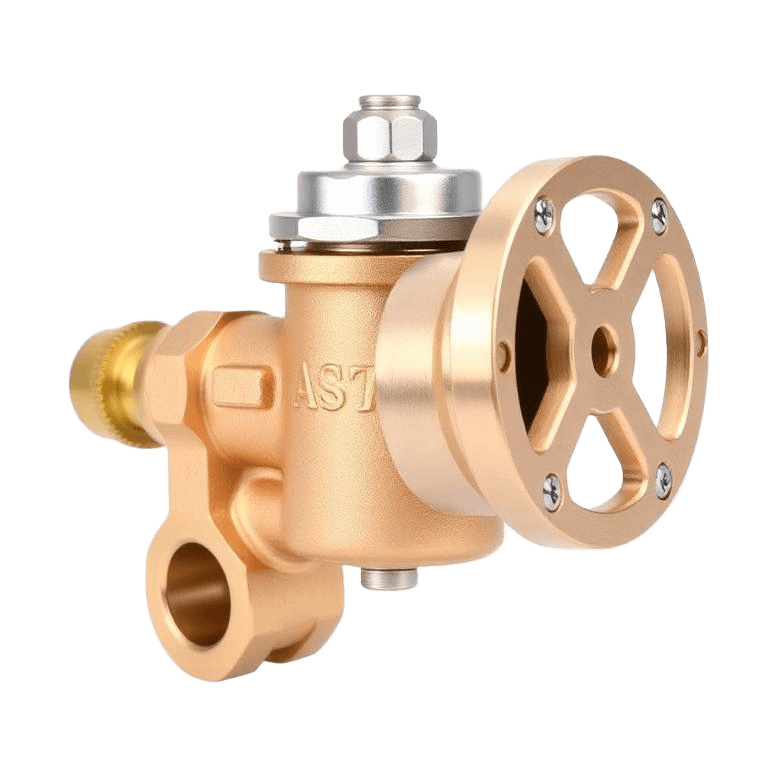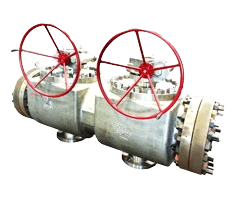
Both valves change the flow in a line to hold a process value. The difference is what moves them. A control valve is moved by an actuator on a signal from a separate controller, and it can hold pressure, flow, level or temperature. A self-acting pressure regulating valve is moved by the line pressure itself, working against a spring, to hold one set pressure with no external power or controller.
Use a regulator where one pressure has to be held simply, without power or a control system. Use a control valve where the set point changes, the valve answers to a control system, or the value to control is not pressure.
Side by side
| Control valve | Pressure regulating valve (self-acting) | |
|---|---|---|
| What moves it | An actuator (pneumatic, electric or hydraulic) on a signal from a controller | Line pressure on a diaphragm or piston, against a spring |
| What it holds | Pressure, flow, level or temperature: whatever the controller measures | One pressure: downstream (pressure reducing) or upstream (back pressure) |
| Power and signals | Actuator power (instrument air or electricity) and a control signal | None for self-acting types |
| Changing the set point | From the control system | By adjusting the spring, usually at the valve |
| How closely it holds the set point | Set by the controller, its tuning and the valve sizing | The held pressure shifts somewhat as flow changes; how much depends on the design and sizing |
| Position feedback | Positioner and position indication available | Usually local pressure gauges only |
| Parts to maintain | Valve, actuator, positioner and instruments | Valve, spring and diaphragm or piston |
When a pressure regulating valve is the wrong choice
- The set point has to change during operation, or be changed from a control room
- The value to control is flow, level or temperature rather than pressure
- The pressure has to be held tightly across a wide range of flows, and the regulator's shift with flow would be too large
- The plant needs remote position indication or diagnostics from the valve
When a control valve is the wrong choice
- A fixed pressure reduction where no instrument air or power is available
- Small utility duties, such as gas supply to a burner or a nitrogen blanket, where a control loop adds parts without adding much
- Remote sites where a self-acting valve is easier to keep running
Neither one is overpressure protection
A regulator or a control valve that fails open can let full upstream pressure through. Where that could overpressure the downstream system, the system still needs a relief or safety valve sized for that case. The design code and the hazard review decide, not the choice of regulator.
In cryogenic service
Both types can be built for cryogenic duty, with an extended bonnet and materials that keep their toughness in the cold. Note that ISO 28921-1, the standard for cryogenic isolating valves, does not apply to control valves, so your specification has to name what applies to them. See cryogenic valve testing standards.
Both are in our range
Our valve range includes control valves, cryogenic control valves, pressure regulating valves and safety relief valves. Tell us the duty and we will discuss which fits.
Questions
- Is a pressure reducing valve the same as a pressure regulating valve?
- A pressure reducing valve is a pressure regulating valve that holds the pressure downstream of it. A back-pressure regulator holds the pressure upstream of it.
- Can a control valve do the job of a regulator?
- Yes, if power, a signal and a controller are available, but it adds parts to buy and maintain. Where only one fixed pressure has to be held, a regulator is simpler.
- Does a regulator need a relief valve downstream?
- If the downstream system could be overpressured when the regulator fails open, yes. The design code and the hazard review decide.
Published by EVOSNT Trading FZCO (EVO LNG Supply). General guidance for engineers and buyers; the purchaser's specification and the applicable standards govern the design and testing of any valve. See our valve range.